Counter space is limited in most independent shops, so every product placed beside the till needs to earn its position.
A well-stocked counter display can increase product visibility, encourage impulse purchases and generate additional sales without requiring a large section of the shop floor. However, simply placing products near the till does not guarantee results. The stand needs to be compact, easy to browse and regularly refreshed.
For small retailers considering a hair accessories display, the key question is not only whether the stand makes sales. It is whether those sales justify the space it occupies.
Why Counter Displays Can Increase Sales
Customers do not always enter a shop planning to buy hair accessories. They may be purchasing a gift, collecting a prescription, browsing clothing or paying for another everyday item.
A counter display puts affordable accessories in front of customers at the moment they are already preparing to spend.
This is particularly effective for products such as:
- Hair elastics
- Clips and grips
- Scrunchies
- Headbands
- Small bows
- Seasonal accessories
These products are practical, inexpensive and easy to understand without assistance. A customer can see the colour, style and price within seconds.
Counter displays can therefore create additional sales from customers who may not have visited a dedicated accessories section elsewhere in the shop.
How Much Counter Space Does a Display Stand Need?
The amount of space required depends on the type of stand and the number of products it carries.
A small countertop spinner or hook display may require a footprint of approximately 30 to 50 centimetres in width and depth. Taller rotating stands can carry more products while using the vertical space above the counter.
Before ordering a stand, measure:
- The available width
- The available depth
- The total height beneath shelves or signage
- The space needed for customers to turn or browse the stand
- Whether the display blocks the till, card machine or staff access
A compact stand should feel visible without making the checkout area cluttered.
Customers also need enough room to remove a product without knocking over neighbouring items. If the stand rotates, check that it can turn fully once it is stocked.
The best position is usually close enough to the payment area to attract attention, but not directly in the way of the transaction.
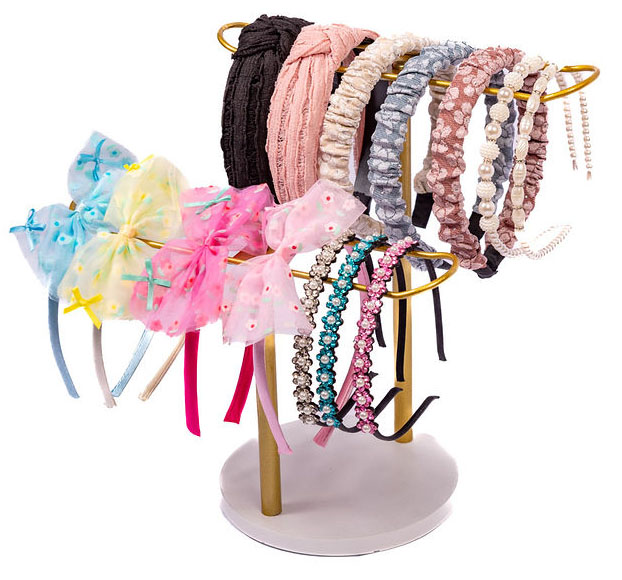
Retailers with limited space can explore compact hair accessories display stands designed to present several product types within a relatively small footprint.
What Is the ROI Per Square Foot?
Return on investment per square foot helps retailers compare the income generated by different parts of the shop.
The simplest calculation is:
Sales generated by the display ÷ floor or counter space used
For example, imagine a stand uses two square feet of counter space and generates £400 in sales over one month.
The sales generated per square foot would be:
£400 ÷ 2 = £200 per square foot
Retailers can also measure gross profit rather than revenue. This provides a clearer indication of what the display contributes after the wholesale cost of the products has been deducted.
For example, if the same stand generates £200 in gross profit, its gross profit return would be £100 per square foot.
When reviewing the return, include:
- The wholesale cost of the stock
- The initial cost of the stand
- Delivery charges
- Staff time spent replenishing it
- Discounts or markdowns
- Damaged or missing stock
The stand itself may be a one-off cost, so its performance should be assessed over several months rather than during the opening week alone.
A small display does not need to generate the highest total revenue in the shop. It needs to produce a worthwhile return relative to the limited space and attention it requires.
Why Impulse Purchases Matter
Impulse purchases increase the value of transactions without requiring additional customers to enter the shop.
A shopper who planned to spend £15 may add a £2 or £3 accessory at the till. That increase can appear small, but it becomes significant when repeated across many transactions.
If ten customers each add a £3 product during the day, the display has generated an additional £30 in revenue. Across a typical trading month, this can make a meaningful contribution.
Hair accessories work well as impulse products because they often meet an immediate need.
A customer may notice that they are running low on elastics. A parent may see clips in a child’s school colour. Another shopper may choose a small accessory as an additional gift.
Impulse buying does not have to rely on pressure. The display simply makes useful, affordable products visible at the right moment.
How Often Should Display Stock Rotate?
A display should look active, even when the core products remain consistent.
Review the stand at least once a week. This does not mean replacing every product. It means checking which lines have sold, which hooks look empty and which products are not attracting attention.
A more substantial rotation can take place every four to six weeks.
This may involve:
- Moving strong sellers to eye level
- Replacing slow products with different colours
- Introducing seasonal styles
- Changing the order of products
- Removing damaged packaging
- Increasing the quantity of reliable basics
Seasonal changes provide natural opportunities to refresh the stand. School colours can be introduced during the summer, brighter pieces may perform well in spring and gift-friendly products can be given more space before Christmas.
Core products such as black elastics, grips and neutral clips can remain throughout the year. The surrounding colours and fashion pieces can then change to keep the display looking fresh.
Keep the Display Full but Not Overcrowded
An empty stand can look neglected, but an overcrowded stand can be difficult to browse.
Products should face forward, prices should be clear and individual lines should be easy to remove. Similar colours can be grouped together, while different product types should remain visually distinct.
Staff should straighten the display regularly, particularly if it is positioned beside a busy till.
A simple stock sheet can help identify:
- The fastest-selling products
- The most successful colours
- Average weekly sales
- Products that need replenishing
- Lines that should be replaced
This information makes repeat ordering more accurate and reduces the risk of filling valuable counter space with products that do not move.
Choose Products Suited to Quick Decisions
Counter displays work best when customers can make a decision without asking several questions.
Products should have:
- Clear prices
- Visible colours and designs
- Straightforward packaging
- Recognisable uses
- Affordable selling points
- Barcodes for easy checkout
Mermaids Hair Accessories supplies wholesale accessories selected with everyday retail environments in mind. The range includes dependable basics, seasonal colours and fashion-led products that can be adjusted around the buying patterns of each shop.
Retailers can open a trade account to explore products and display options suited to counters, tills and other high-traffic areas.