Choosing the right wholesale hair accessories supplier can have a direct impact on your margins, stock levels and the way your range performs in store.
The lowest unit price is not always the best deal. Retailers also need to consider minimum order quantities, delivery times, product quality, barcoding, stock availability and how easily slower-selling products can be replaced.
A good supplier should help you create a balanced range that includes reliable everyday products alongside seasonal colours and fashion-led pieces. Here is what to consider before opening a wholesale trade account.
Start With the Type of Range Your Customers Need
Before comparing suppliers, think about what normally sells in your shop.
A pharmacy, gift shop, fashion boutique and department store may all sell hair accessories, but they are unlikely to need exactly the same product mix.
Most retailers benefit from combining three types of product:
- Everyday essentials such as hair elastics, grips and basic clips
- Brighter colours or fashion-led pieces that encourage impulse purchases
- Seasonal products that refresh the display throughout the year
A supplier with a broad range gives you more flexibility. You can build the initial selection around proven essentials and introduce new colours or styles once you understand what your customers prefer.
Look at how frequently the supplier introduces new products too. Fashion accessories can change quickly, but a range should not be so trend-focused that reliable basics become difficult to reorder.
What Is a Typical MOQ for Wholesale Hair Accessories?
MOQ stands for minimum order quantity. It is the smallest quantity or order value a supplier will accept.
There is no single standard MOQ across the hair accessories industry. It can be applied in several ways:
- A minimum total opening order
- A minimum spend for each subsequent order
- A minimum number of packs per product
- A minimum number of units per colour or design
- A full carton or case requirement
UK wholesalers often work with relatively modest opening-order values, sometimes in the region of £50 to £150, although this varies considerably between suppliers. Products may then be sold in small packs, allowing retailers to test several lines without committing heavily to one design. Some established UK accessory wholesalers currently advertise minimum order values below £100.
Ordering directly from an overseas manufacturer usually involves larger quantities. Standard designs may be available from around 50 to 100 units per design, while customised colours, branding, materials or moulds can increase the MOQ to several hundred or even more than 1,000 units per product.
Before ordering, ask the supplier:
- Is the MOQ based on the total order or each individual product?
- Can different colours be mixed within a pack?
- Are repeat-order minimums lower than the opening order?
- Do sale products count towards the minimum spend?
- Is carriage included or charged separately?
- Is the minimum calculated before or after VAT?
A low MOQ can be especially useful when opening a new shop, testing a hair accessories category or refreshing a small display. It allows you to learn from actual sales rather than relying on a large initial stock commitment.
UK Supplier vs Importing Directly
Importing directly from a factory can reduce the headline unit price, particularly when purchasing large quantities. However, the final landed cost can be much higher than the price shown on the initial quotation.
Retailers need to account for:
- International shipping
- Import VAT
- Customs duty where applicable
- Customs declarations
- Freight forwarding or handling charges
- Currency fluctuations
- Product testing
- Packaging and labelling
- Storage for larger quantities
- Damaged or unsuitable stock
Businesses importing goods into the UK may need to declare the goods and pay import VAT and any customs duty due. The applicable tariff depends on factors including the product’s commodity code, value and country of origin.
Delivery times may also be measured in weeks or months rather than days. If a particular colour or clip suddenly becomes popular, placing a quick repeat order may not be possible.
A UK wholesale supplier will usually offer:
- Faster delivery
- Lower opening quantities
- Simpler returns and communication
- Prices in pounds sterling
- Easier repeat ordering
- Less administration
- Stock selected for the UK retail market
Direct importing can make sense for large retailers with predictable sales volumes, warehousing and the resources to manage compliance. For many independent shops, however, using a UK supplier provides greater flexibility and reduces the risk of holding too much stock.
The right choice depends on your available cash, storage capacity and expected sales volume, not simply the lowest quoted unit price.
What Margins Can Retailers Expect?
Hair accessories are well suited to retail because they are affordable, practical and easy for customers to add to a purchase.
A common starting point in retail is keystone pricing. This means selling an item for approximately twice its wholesale cost. For example, an accessory bought for £1 and sold for £2 has a 100% markup and a 50% gross margin before other costs.
It is important not to confuse markup with margin:
Markup measures how much has been added to the cost price.
Gross margin measures the gross profit as a percentage of the selling price.
The appropriate selling price will depend on:
- The type and appearance of the product
- What similar retailers charge
- Whether your prices include VAT
- Packaging and display quality
- Your shop’s location and customer base
- Card fees, staffing and other overheads
- Expected markdowns or promotional activity
- The likelihood of damage, loss or unsold stock
Low-priced accessories may need a higher percentage margin because each individual sale contributes a relatively small cash amount towards overheads.
Do not assess a supplier purely on the percentage margin shown in a catalogue. A product offering a large theoretical margin is not valuable if it does not sell. Stock turn, repeat demand and the amount of space the product occupies should all be considered.
A slightly lower margin on a dependable product that sells every week can be more useful than a high-margin fashion piece that remains on the display for months.
Check Product Quality Before Committing
Affordable products still need to feel dependable.
Ask to see samples or place a small test order before introducing a large range. Inspect products in the same way a customer would.
For hair elastics, consider whether they stretch evenly and retain their shape. For clips, grips and bands, check:
- The finish and overall appearance
- Whether surfaces feel smooth
- The strength of springs and fastenings
- Whether decorative pieces are firmly attached
- How the product feels in the hair
- Whether colours and finishes are consistent
- Whether packaging protects the product
- Whether the item looks presentable on display
You should also ask how the supplier manages product safety, testing and traceability.
UK businesses must not sell consumer products that they know, or should have known, are unsafe. Retailers should also retain information that identifies their suppliers so products can be traced if a problem arises.
A reputable supplier should be able to answer reasonable questions about product origin, materials, testing and what happens if a product needs to be withdrawn.
Review Packaging, Barcodes and Display Options
Presentation can make a major difference to the performance of small accessories.
Products should be easy for customers to browse without creating a display that feels cluttered. Packaging should clearly show the product and remain tidy after handling.
Before opening an account, check:
- Whether each product has a barcode
- Whether barcodes are unique and scan correctly
- How products are packed
- Whether recommended retail prices are supplied
- Whether products arrive ready to display
- Whether display hooks or stands are available
- How much space the opening range will require
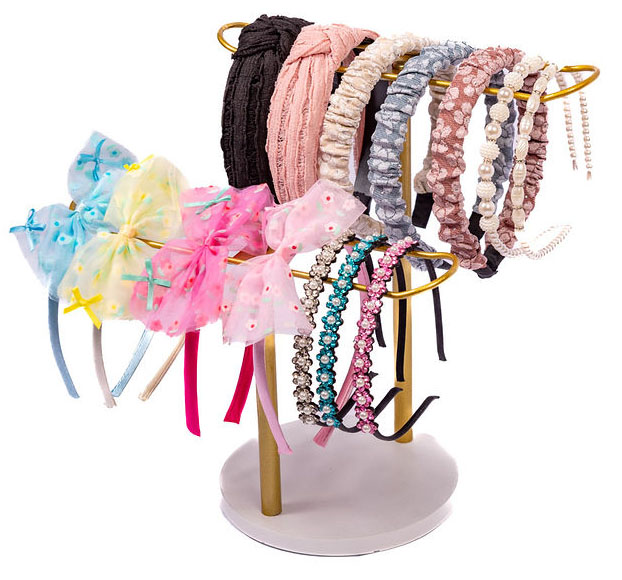
Display equipment is particularly important if you are introducing the category for the first time. A purpose-built stand can help organise different product types, keep the range visible and make stock replenishment easier.
Mermaids Hair Accessories offers solutions for retailers that want a straightforward way to introduce or expand the category. Explore the available hair accessories display stands when planning how the range will be presented in your store.
Understand Ordering and Delivery
Ask how the ordering process works before committing to a supplier.
You should know:
- Whether orders can be placed online
- What information is needed to open an account
- How quickly orders are dispatched
- Whether stock availability is shown accurately
- What delivery charges apply
- What happens when a product is out of stock
- How shortages or damaged goods are reported
- Whether repeat orders can be placed easily
Consistent stock availability matters for core products. Customers often return to buy the same elastics, grips or everyday clips, so retailers need to know that successful lines can be replenished.
For fashion products, consider how quickly the supplier responds to changing trends. A useful supplier should maintain reliable basics while continuing to introduce fresh colours and styles.
What Should You Check Before Opening a Trade Account?
Before submitting an application, review the supplier’s complete trade terms rather than focusing only on product prices.
Check the following areas.
Account eligibility
Find out whether the supplier works exclusively with registered businesses and what evidence is required. You may need to provide a company number, VAT number, shop address, website or social media page.
Opening order and repeat-order minimums
Confirm the total amount you need to spend and whether minimum pack quantities apply to individual products.
Prices and VAT
Check whether catalogue prices include or exclude VAT. This can significantly affect the apparent cost of an order.
Payment terms
New accounts may require payment before dispatch. Credit terms might only become available after a trading history has been established.
Delivery charges
A low product price can be offset by expensive carriage. Check whether free delivery becomes available above a particular order value.
Returns and damaged goods
Read the procedure for reporting shortages, damaged products or incorrectly supplied items. Note any deadlines for submitting a claim.
Product information
Confirm whether dimensions, pack quantities, materials, barcodes and recommended selling prices are clearly provided.
Exclusivity
Ask whether the supplier offers area exclusivity or whether the same range may be supplied to nearby retailers.
Support with displays
Find out whether stands, merchandising recommendations or suggested opening ranges are available.
Availability of repeat stock
Ask whether everyday lines are held continuously or purchased as limited batches.
Look for a Supplier That Makes the Range Easy to Manage
The best wholesale relationship should save time as well as provide suitable products.
Mermaids Hair Accessories selects its range with real retail environments in mind. The collection combines dependable everyday products with seasonal colours, brighter pieces and fashion-led styles.
Products are chosen to look good on display, feel reliable in use and sit at price points that support volume sales. Each item includes a barcode to assist with till sales and stock control, while straightforward pricing makes the range easier for staff and customers to understand.
As sales patterns become clearer, the product mix can be adjusted. Strong sellers can be repeated while slower products make way for new colours, styles or seasonal lines.
Retailers looking for an affordable and manageable accessories range can open a Mermaids Hair Accessories trade account to view the wholesale collection and discuss the right product mix for their store.